Showing posts with label homeschooling. Show all posts

Wednesday, August 13, 2014

Apologia Educational Ministries: "Flourish" Review

Flourish Book Review
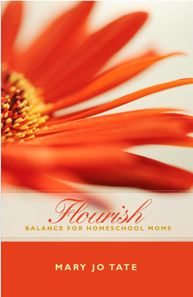
Apologia Educational Ministries has become a go-to resource for many homeschooling families. Not only do they have superb science curricula for elementary through high school, but they also have books on history, Christian teaching, and encouragement. One of these books of encouragement is Flourish: Balance for Homeschool Moms written by Mary Jo Tate.
Flourish Book Review

Flourish Book Review


This 288-page softcover book retails for just $15.00 and is replete with Mary Jo's life experiences as a single homeschooling mom with a home-based business. Perhaps you are a married homeschooling mom who is not receiving a paycheck or a homeschooling mom who works outside of the home. This book is still for you. The encouragement and tips provided in this book are applicable to many different people. The chapters are topic specific, so if you aren't single, you can choose to skip the chapter on being a single mom. However, Mary Jo suggests you read it on the off chance something within it will help you to understand what your single friends are dealing with and will provide you with ideas that may encourage them. There are chapters on raising kids and chapters on our attitudes. The chapters I enjoyed the most, despite the fact that I am not an organized person, were the ones on organization—setting goals, big dreams, weekly plan, daily tasks, running to-do list, etc. I think I loved them because the direction Mary Jo provided was easy for me to accomplish. I didn't have to purchase binders and folders and filing cabinets. I just needed some paper and a pen.

I don't think any of her ideas are wholly revolutionary, but I feel like her book did provide some balance for my life. When I first wrote down work- and school-related tasks on a running to-do list, there were nearly 25 things on it. It felt so good to be able to cross things off that list once I finished them or even just worked on them for a portion of the day. One thing she suggests is writing things down that were accomplished but not planned. This allows you to look back at your week and see what you actually did get done. One week I didn't write down blogging, but I did have a few minutes I could spend on a homeschool science-related post. What a good feeling that was to actually get something done I didn't plan on doing!

One of the biggest things I took from Flourish is to multitask when I am able to do so. I took Flourish with me to the doctor's office so that I could read it while I waited. I listened to a CD I needed to review while driving in the car. As I wait for a page to upload for work, I try to plan our school for the year. When I take my son to work, I run errands while I am out so that I can save gas and time.

I have not done a great job writing out a specific daily task list, but I have found more organization through Mary Jo's encouragement than I had before reading Flourish. She does provide some forms in the back of the book so that you don't have to create your own. There will also be some downloadable materials available for those who purchase the book. However, I simply have been writing things down on notebook paper and keeping it by my computer. I have found in the few weeks since I've read this book that I am a bit less absent-minded, except for when health issues for three people in the family hit at once. Nothing throws me off more than worrying about the health of my loved ones. I know, I know. I'm not supposed to worry. I have prayed more recently. I have been working on memorizing Scripture so that I am strengthened spiritually. I even find that I believe a little bit more in my ability to accomplish things that I didn't want to do before, like make things from scratch and doing a little bit more cooking from recipes instead of just throwing things together that I've always made. One thing I have to do is make time to accomplish my big dream of finishing my novel. That is the thing that always gets postponed.

There are 16 chapters in this book plus some appendices. Some of the chapters are entitled:

Change Your Mind to Change Your Time
The FREEDOM Toolbox
Where Did My Time Go?
Aim High: Setting Goals
What Do I Do Next? Seven Essential Planning Tools
We Interrupt This Program
It's Time for an Attitude Adjustment
Training Your Children
Making Memories
Managing Your Home
Flourishing as a Single Mom
Home Business

Mary Jo Tate has been a single mom, has started her own home-based business, and has had health issues. Thankfully she has shared her experiences with us. She is down to earth. Her methods are simple. They are doable—for any of us. The benefits obtained are worth far more than what you will pay for this book. You may say to yourself, "Now, why didn't I think of that?" or "Of course, it's so simple!" That's what I love. It's like Mary Jo gave me permission to stop struggling and to do those things that I enjoy, like reading. Whatever you enjoy doing but don't take the time to do, Mary Jo teaches you how to incorporate those hobbies back into your life. Yes, you can have your own time!

I plan on re-reading this book so that I can continue to establish balance in my life and implement the things that I didn't on the first read through.

You can find Flourish through these social media Links:

Twitter: https://twitter.com/maryjotate #flourishathome


Click to read Crew Reviews

Crew Disclaimer

Thursday, August 7, 2014

Roman Roads Media Review

Roman Roads Media Review
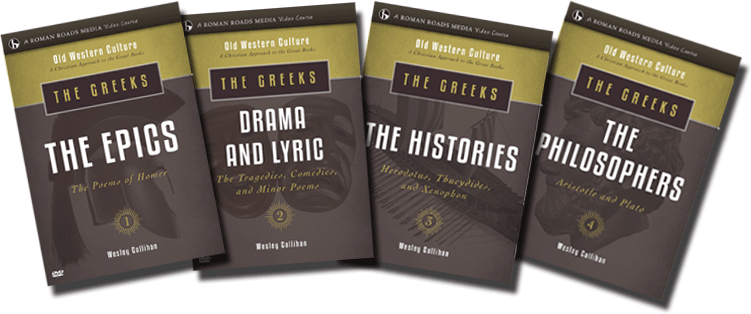
As a part of the Review Crew, I was presented some options,one of which I could use and review, from Roman Roads Media, a company specializing in a classical Christian education. These options were such things as Old Western Culture: The Romans, The Grammar of Poetry, Dave Raymond's American History, Economics for Everybody, Visual Latin, or Old Western Culture: The Greeks. Because we enjoy Greek history and stories so much in our household, I was eager to review, along with my son who is going to be a junior, Old Western Culture: The Greeks. This is a four-unit Christian approach to the "great books" that includes (as can be seen below) The Epics, Drama and Lyric, The Histories, and The Philosophers. The product that was given to us was the online access to the full-year course of Old Western Culture: The Greeks along with the DVD set for Drama and Lyric.

Roman Roads Media Review

We chose to focus most of our time on the histories since we've spent some time recently studying the philosophers and my son wasn't too excited about having to do a lot of reading. He was surprised, however, to find out that "The Histories" unit included just as much reading as "The Epics" and "Drama and Lyric."

Roman Roads Media Review

Our homeschool has never taken a classical approach to Christian education because I believed it was too rigid, and I have been mainly eclectic, using an all-in-one curriculum for the first couple of years but then sampling many different curricula over the years since there are so many wonderful products available to homeschoolers nowadays; I didn't want to miss out on anything. However, it appears that I may have actually been missing out on something.

Recommended for students who are 14 and older, the full year of The Greeks Year 1 curriculum is available through online streaming for $199 or 4-DVD sets for $224. Each DVD set includes four DVDs, a guide, a PDF workbook, exams, and answer keys. Each of these things is accessible as part of the program through the online version. Hard copies of the workbooks are available also but are not necessary. Individual DVD sets that include a guide are available at a cost of $56 per unit, but the student workbook must be purchased separately as it is not included as a PDF (as with the purchase of the full-year course.)

My first impression of the online version of The Greeks is that it is a no-frills presentation. Each element of the course—the assignments, the lectures, and the quizzes—are simply listed one right after the other on the page. 


I found it a bit difficult to find where we left off each time we re-entered the course outline. As you can see, the headings for each unit are not obvious. They are smaller than the boxes that list the lessons. The lesson boxes also close each time you log out, so that made it difficult to remember where we were. The image above shows that the word "Completed" is present when each step has been finished. However, we had to open each lesson to find our place, if we couldn't remember. Perhaps if each new unit were a different color that would make it easier to distinguish between them.

The program is extremely easy to use. All my son had to do was click each new step, and it would open to an assignment or a video. Thankfully, Roman Roads Media has provided various options for acquiring the books that are required for The Greeks. The very first step for each unit has a "Note on Translations and Texts" which lists the works required and the translations suggested. In the online course, these works are provided as PDF links at the bottom of the first step.

The videos are presented by Wes Callihan. For the videos we viewed, he spent his time lecturing comfortably from an arm chair. I was impressed with his knowledge. My son and I both learned a great deal from listening to his lectures. The only complaint I have is that he has quite a bit of verbal pausing—a lot of "um" and "uh." If you can ignore that, it is quite enjoyable. I found his voice very relaxing as well. The videos don't just show Mr. Callihan sitting in his chair, though. They show ruins, works of art, drawings of the people being discussed, and more—all things that enhance the student's understanding.

The first book in The Histories unit was Histories by Herodotus, translated by George Rawlinson. The version provided by Roman Roads Media was a 629-page book. So, my son's idea that he wouldn't have to do much reading was proved completely false. This reading stretched through six lessons. Needless to say, we didn't finish the reading of HistoriesThe History of the Peloponnesian War by Thucydides, which we didn't get to, is four lessons long, and Anabasis by Xenophon is just one. I think about the lower age limit of 14+, and I think about my 14-year-old. He would not enjoy this course. When trying to decide whether or not to purchase this course, think about the amount of reading your child will have to do and whether or not he/she likes to read. One option, although you'll probably end up with a different translation, is to find an audio version. My son tried this and found it a bit more enjoyable.

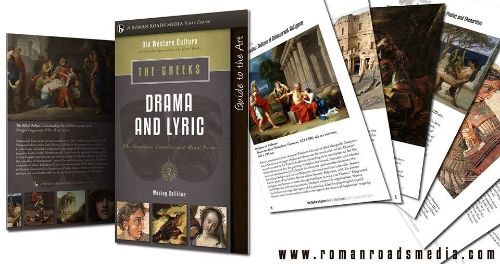
As I mentioned early on, we did receive the DVD set for Drama and Lyric. I am the type of person who likes to hold a book in my hand rather than read an e-book. In the same vein, I would rather have a case full of DVDs than have to access everything on the computer. I think that might be because I grew up before personal computers and DVD players. Regardless, the "Guide to the Art" that is provided in the case is wonderful. It provides instructions on using the course, along with a materials list and a recommended schedule. Additional assignments are listed along with age level "warnings"—"will encounter mature themes such as paganism, sexual immorality...and nudity in classical painting and sculpture." I greatly appreciate these warnings. The same warnings are provided in the PDF workbook that must be downloaded on the online version. It is located in step 1-"Welcome to the Greeks: Year 1." It is just a bit more difficult to find the information with the online version. There are many PDFs at the bottom of some of the pages (be sure to scroll all the way down so you don't miss any). I would strongly urge parents to read through all of the introductory materials, both online and in print, before your child begins the program. I'm fairly sure the child will not.

I noticed, as far as the nudity in the paintings is concerned, that Roman Roads does not dwell on any painting that displays nudity. Some paintings that have it are shown on a smaller scale than others. It seems to me that maybe they try to avoid it as much as possible, unlike some other Greek and ancient curricula that allow the image to be displayed for longer than I would like. I understand that they are classical works of art, but I don't believe my children, especially my boys, need to see nudity in any form until they are married.

Drama and Lyric covers the development of the theater, the period and the poets, Aeschylus, Sophocles, Euripides, Aristophanes, lyric poetry, Quintus of Smyrna, and Apollonius. The Epics covers the Iliad and the Odyssey and discusses the Legacy of Homer in Western Civilization. The Histories contents were discussed above. The Philosophers provides an overview of Socrates, Plato, and Aristotle but spends the majority of the time on Plato and Aristotle. Each unit has quizzes and a final test, as well as a paper.

Despite the few things that I commented on that I didn't like, I think this program is a very high quality choice for world history and/or literature for a high school student. It is well worth the price. I think it would be extremely difficult to find the same level of knowledge of ancient Greek civilization in any other high school product. Wes Callihan is truly a master. I would think that a high school student who took this class would certainly be ahead of his/her peers upon entering college in terms of culture and historical literacy.

We enjoyed the program so much and felt it provided such a wonderful learning experience that my son will be completing it for school this year.

Find Roman Roads Media on these social media platforms: 

Click to read Crew Reviews

Crew Disclaimer

Monday, August 4, 2014

Teaching Science to Your Homeschooler


The other day I met with a friend who will start her homeschooling journey in a few weeks. Because the curriculum choices are numerous and can be quite overwhelming to a new homeschooler, she wanted some help in figuring out what to do for history, science, and math. Through the course of our conversation, she let me know that she has a membership to the zoo in our city. Since the children she will be homeschooling are elementary age and there is a bit more flexibility in what she can teach, I suggested she take a field trip to the zoo and have each of her children choose their 10 favorite animals that live at the zoo. She can then take one animal per month and study it. Scientific websites can be found by searching by the animal's common name. 

My friend's son's favorite animal is the Komodo Dragon. Here are some suggestions for a study of this animal (which can be applied to any other animal):
  • What is the scientific name of this animal? Consider a further study of the classification of animals. How and when did this classification system begin? How many Kingdoms are there? Genus? Species?

  • Where does this animal live? Consider printing out a map of the continent/country where this animal lives. Free outline maps can be found here. While working with the map, label the capital of that country and other major cities. Label the rivers. How close does this animal live to a major water source?

  • What does this animal eat? Is it an herbivore, carnivore, or omnivore? How does it eat? What does it eat in the winter? How does its diet compare to our own? Is there an ample supply of this food source where it lives (look back at the map)? Is this something you would eat? If yes, consider finding a recipe that uses that food or one like it.

  • How big can this animal grow—length, height, weight? What is the lifespan? How does this compare to human beings? How tall are you now?

  • How fast can the animal move? How does it get around? Compare this to some other animals or to human beings. Incorporate some math into this. For example, if said animal can move 10 miles per hour, how long would it take to get from the zoo to your house? Of course, you'll need to use a map to figure this out. Think of other ways to use math in this way.

  • What are some special characteristics of this animal? Does it have a long tongue? Does it use echolocation?

  • Is this animal threatened or endangered? If yes, why? What are the criteria for being placed on the endangered species list? Who created this list? Who maintains it? How are animals that are threatened or endangered protected? What are preserves? What are wildlife conservation areas? How many animals are on each list? What role do zoos play in animal protection and preservation?

  • What are this animal's major threats? What preys on this animal? What does it use to defend itself?

  • Learn how to draw this animal. Here is a video about drawing a Komodo Dragon. Can you find any famous paintings that include the animal? 

  • Are there any legends about the animal you are researching?

  • When was this animal discovered or has it always been known to exist?

  • Are there children's book (not fact books) that feature this animal? Komodo! by Peter Sis would be an example. Spend some time reading stories about the animal.

  • What other zoos house this animal? Learn about the history of zoos. When did they begin? Where are most zoos located? (Again, use a map and mark where major zoos are located.) What is the mission of most zoos?

  • Have your child write a report about the animal using all the facts they have learned.
That is a pretty good list for now. I am sure there are many other things that can be added. Simply brainstorm how the animal you choose can be found throughout the academic subjects.


Friday, August 1, 2014

Hewitt Homeschooling Review

Hewitt Homeschooling Review


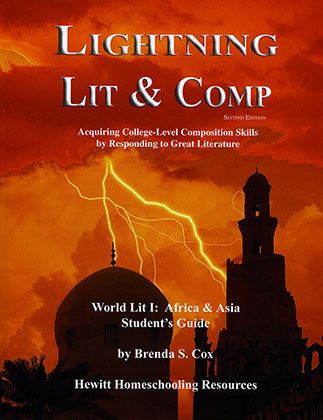
Over the years, I have accumulated quite a few products from Hewitt Homeschooling, including the 7th grade curriculum, high school British Lit from the early 19th century, and the British Medieval Pack. I recently had the opportunity to review Lightning Literature and Composition World 1: Africa & Asia Student's Guide for grades 11 and 12. Because my oldest son loves Japan and his dream is to visit after graduation, I thought he might really enjoy this curriculum since once of the countries this book visits through literature is, in fact, Japan. We were also given Lightning Literature Composition World 1: Africa & Asia Teacher Guide

Hewitt Homeschooling Review

All of the student books for the older grades that are created by Hewitt Homeschooling are simply beautiful. This new one is no exception. The information contained within it is also top-notch. They provide much more than synopsis and reading comprehension questions. In this 272-page student guide, which sells for only $29.95, perspectives on the literature or the people of the area are given. This allowed my son to think beyond his own small corner of the world and gain some insight into what and how others think. Words that were likely to be new to the student in the reading selections were defined in the student guide. When my son worked through the section on Japan, he was very eager to relate to me the things he was learning. (I would have liked to have seen pronunciation guides for these words. Some words in other chapters have a guide.)

In the chapter on Japan, there is also a section that introduces the student to various international writers. I thought this reading would bore my son, but he was fascinated. Again, he shared with me the things he was learning as he read through this.

The specific countries/regions included in this curriculum are Africa, Japan, Middle East, India, Vietnam, and others. The fourth unit discusses autobiographies and allows the student to choose from a list provided in the appendix. At least five books (novels and books of poetry) need to be purchased separately or borrowed from the library to work through this curriculum. We simply purchased through Amazon and downloaded the works to the Kindle app on our tablet. While you may be hesitant to have your child work through a curriculum that includes works that are not Christian in nature, Hewitt Homeschooling does a great job teaching the student how to examine these works with a Christian worldview.

Not only is Hewitt Homeschooling interested in exposing our students to great writers from around the world and helping them to gain an appreciation for these other cultures, they want to assist our children to become great writers themselves. The subtitle on the text reads, "Acquiring College-Level Composition Skills by Responding to Great Literature." Okay, so college-level writing and great writing might not be synonymous, but college-level is probably an improvement from the writing skills they did have. More often than not, reading will enhance one's writing skills. The more one reads, especially of a wide variety of writers, the more likely one will become a better writer. Hewitt Homeschooling provides many different types of writing exercises in each chapter. For example, in the Japan chapter, there is a writing assignment that talks about first person point of view and how a scene could have been different if taken from another character's POV. The student is asked to rewrite the scene. Another discusses direct versus indirect communication. There are several exercises that require a one- to two-page essay about topics presented in the reading. Some options are based on the Japanese culture. In this chapter alone, there are 13 different options for writing assignments.

Each chapter also includes literary lessons: historical fiction, the sounds of poetry, point of view, themes in poetry, symbolism, imagery, autobiography, and tone.

The appendices provide even more options for further learning such as projects that tie the reading selections to other subjects such as history, science, language, etc. Additional reading suggestions from the selected authors and regions are provided, as well as reading recommendations for younger students. One of the appendices discusses the cultural/core values of the regions studied. There is also a breakdown of the course by semester or full-year so that the teacher does not have to create a schedule, including a way to coordinate the learning with teaching geography.

The teacher guide is a simple black-and-white, 82-page answer guide priced at $2.95 that includes a teaching schedule and grading tips.

I can't think of anything negative to say about any of the Hewitt Homeschooling products we have used. They are beautifully made and well thought out. It is obvious that a great deal of time went into creating these resources for homeschoolers, including choosing the reading selections and developing the lessons, both cultural and literary. While my son might complain about the idea of having to read certain selections or do the writing assignments, I know that he is going to increase his cultural literacy through this product. We did not have enough time to finish the course during the review period but have already decided that this will be what he uses for world literature for the coming year.

Hewitt Homeschooling on Social Media:

Facebook:
https://www.facebook.com/HewittHomeschooling

Twitter:
https://twitter.com/HewittOnline

Pinterest:
http://www.pinterest.com/hewittonline/

Google Plus:
https://plus.google.com/b/115323246990194958229/+HewittHomeschoolingResources/posts

Hewitt Blog:
http://hewitthomeschoolingresources.blogspot.com/


Click to read Crew Reviews
Crew Disclaimer

Tuesday, July 1, 2014

Veritas Press Self-Paced Omnibus I Review

Veritas Press Review

For years, I have been receiving Veritas Press catalogs in the mail but have never purchased anything from them. I always look through the catalogs, wishing I could afford some of the programs that appeared to be very well constructed and educational. I had the opportunity, as a part of the Schoolhouse Crew, to finally try one of their programs: Self-Paced Omnibus I. This is an online video program that also has a book (or ebook) available. In the catalog, Omnibus I is listed in the seventh grade section. It can be used for children older than seventh grade, however, so the recommended age range is 12 and up.

Veritas Press Review
Each video session contains numerous engaging activities. As each part of the session ends, the video screen "slides" to the next activity. In the upper right corner, the progression can be viewed so that the student knows exactly where he/she is in the lesson. Also, each segment has a bar across the bottom of the screen that displays the time left in each particular video.

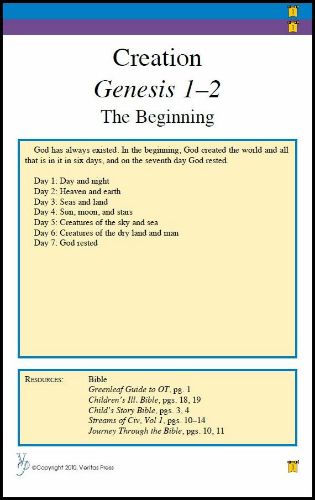
There are usually between 10 and 15 different segments per session, including lectures, debates, on-the-street interviews, quizzes, and games. The course begins at Genesis and discusses other books of the Bible, including Exodus, I and II Samuel, I and II Kings, Luke, and Acts throughout. Ancient texts include Gilgamesh, the Code of Hammurabi, Odyssey, Oresteia, the Theban Triology, Aeneid, and Julius Caesar. Not only is history taught in this course, but literature and theology are taught as well.

The self-paced program is $295.00 for the full year; siblings receive a discount of $100 off the price. All of the reading materials required for the program can be purchased through Veritas Press for $151.32. Those who choose to follow the live program will pay $595. The textbook is a 605-page hardcover book that takes the student through the course and provides questions for discussion.

The way Omnibus I works, students cannot move forward until everything in the video session is heard, games played, and quizzes taken. They can review everything once they are finished but cannot skip ahead. Quiz reports can be printed out. Some quizzes ask questions about material heard in the lectures, while others simply deal with what is in the assigned reading. Most of the information in the assigned reading is not discussed in the videos.

(The two images below are from the book.)

Veritas Press Review                                     Veritas Press Review

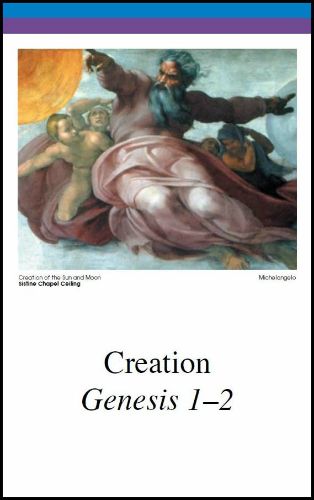
OPINION: I am torn in my opinion about this program. While there is a lot of knowledge shared, I had to listen to everything very closely to be sure what was shared was sound theology. During the session on Genesis, there was a discussion about Michelangelo's painting of the Sistine Chapel. In one scene in the painting, God is surrounded by cherubim, and under his arm, there is a woman. Two different views of who the woman could be—Mary or Eve—were shared. After sharing these views, the speaker, Bruce Etter, shared his own view, that this woman is wisdom—Sophia. When my husband heard this, it raised all sorts of red flags (goddess Sophia), and he didn't want my daughter to listen to any more. From that point on, she didn't believe anything that was said. This opened up a deep discussion about Gnostics and testing everything someone says against Scripture.

We talked about the fact that Mr. Etter never mentioned "goddess" Sophia but explained that the term is Greek for wisdom. I also told her that she needs to learn how to test what anyone says, even Mom and Dad, against Scripture to see if what they are saying is true. She continued with the program, but she had put up a wall and found it hard to believe the rest of what he had to say.

As we continued on, it seemed to me that the topics that were discussed could potentially confuse students. Various theories are discussed; some of these theories I've never even heard of. I was concerned that my daughter would believe some of these theories. They are presented in a way that they sound plausible. Not until the end of the discussion are they contradicted. While it is important to understand other beliefs that are out there, I'm not sure this format is the best way to do that. I'm not sure middle schoolers are capable of differentiating between good theories and bad theories. Much discussion is required to be sure they understand the truth.

I would have liked to have seen more history when discussing Genesis and Exodus and a little less philosophy, a little less "this is what non-Christians think." If I purchase a program that it supposed to teach my child about the Bible and Christian theology, I don't expect to hear about what everyone else thinks. The conversation about predestination and free will was completely over my daughter's head. It is an ages-old debate, and I feel that too much time was spent on it. There was little discussion about the events in Exodus and even less, I feel, on the majesty of God.

During the discussion about the Ten Commandments, I did appreciate how Mr. Etter presented the information. He explained the spirit of the Ten Commandments, how it is not just obeying the letter of the law but obeying it in spirit. For example, the seventh commandment says to not commit adultery. Obviously middle schoolers are not in danger of committing that sin. However, do they obey the spirit of the law? Do they keep themselves pure? Do they pray for their future spouse? I REALLY like the way he presented this information.

As far as the video sessions, I was bored with the on-the-street interviews. I felt they were too long. One of the activities in Genesis had me a bit confused. We were supposed to watch how certain items morphed into something beautiful. I thought we were going to watch a caterpillar become a moth. Instead, we watched pictures of slugs, tornadoes, rotten oranges, and creepy spiders being used to make a photo montage. Not only was it not what we thought it would be, it lasted too long. Also, some of the debates we watched were almost 30 minutes long.

I looked through most of the ebook, though we didn't use it except for some reading at the very beginning of the course. It is put together well and filled with many illustrations. I tend to be on the conservative side of things, so I probably would not feel comfortable using this book. There are many, many paintings, drawings, and pictures of statues that include partially naked men and women. I understand that these pieces of art are classical pieces and many people do not find them offensive, but if I am raising my children to be modest and to not obsess over the human figure as simply an object, then I'm not going to let them look at pictures of naked people even though it is consider to be classical art.

I am glad that I had the chance to review this product. It allowed for some good discussions with my daughter I might not have had otherwise. I was also able to see that not everything that looks like it would work for our family will and that I don't have to be disappointed if I can't afford a more expensive program.

I know that there are people who love this program. Be sure to read some other reviews to see how this worked or not with other families. Just because it didn't work for us, doesn't mean it won't work for you.

Social media links:
Facebook – https://www.facebook.com/veritaspress
Twitter -- https://twitter.com/veritaspress
Pinterest – http://www.pinterest.com/source/veritaspress.com/
Google+ -- https://plus.google.com/100404634762414542020/about

Click to read Crew Reviews

Crew Disclaimer

Monday, June 23, 2014

National Parks of the United States


As we begin our journey into the national parks of the United States, let's begin with a history of the National Park Service. As early as 1872, Congress designated a piece of land as a national park. This piece of land was located in the territories (not yet states) of Montana and Wyoming—Yellowstone. It was henceforth under the protection of the United States government so that its beauty could remain "for the benefit and enjoyment of the people."

President Theodore Roosevelt, during his term in office from 1901 to 1909, established five more national parks: Crater Lake, Wind Cave, Sullys Hill, Mesa Verde, and Platt. Some of these have been redesignated and are no longer national parks. Roosevelt also signed the Antiquities Act of June 8, 1906. This act would allow future generations to designate historic landmarks, structures, and other objects as national monuments.

On August 25, 1916, President Woodrow Wilson signed into law the act that created the National Park Service under the jurisdiction of the Department of the Interior. The mission of the Department of the Interior reads: "...protects and manages the nation’s natural resources and cultural heritage; provides scientific and other information about those resources; and honors its trust responsibilities or special commitments to American Indians, Alaska Natives, and affiliated island communities."

The mission of the National Park Service reads: "The National Park Service preserves unimpaired the natural and cultural resources and values of the national park system for the enjoyment, education, and inspiration of this and future generations. The Park Service cooperates with partners to extend the benefits of natural and cultural resource conservation and outdoor recreation throughout this country and the world."


Today, there are 401 national parks. They exist in every state and in Washington, D.C.; Guam; Puerto Rico; the Virgin Islands; and American Samoa. These 401 national parks cover 84,000,000 acres of land and 4,500,000 acres of water (oceans, lakes, and reservoirs). In addition to the parks, there are 77 national monuments. As of 2008, there were 27,000 historic structures and more than 2400 historic landmarks. The smallest national park is Thaddeus Kosciuszko National Park in PA which is just 0.2 acres. The largest is Wrangell-St. Elias National Park and Preserve in AK which is 13.2 million acres.

The current director of the National Park Service is Jon Jarvis. He has served in this capacity since 2009. Nearly 28,000 people are employed by the National Park Service with another 2.5 million volunteers.

Our national parks are visited by roughly 300,000,000 people per year. Most national parks have a wide variety of activities year-round. Camping is available in many parks as well. Some parks take reservations for camping, but others are first-come, first-served. Find a park through the National Park Service and then click "Plan Your Visit" to find out about the operating hours, fees, reservations, and things to do.

Spend some time researching the National Park Service website, even if you aren't planning a trip. Consider using the website for supplemental material if you homeschool. With tabs like "Discovery History" and "Explore Nature," you're sure to find information that will interest your whole family. Choose a park and do some "Distance Learning."

The 10 most popular national parks are as follows:

1. Great Smoky Mountain National Park
2. Grand Canyon National Park
3. Yosemite National Park
4. Yellowstone National Park
5. Olympic National Park
6. Rocky Mountain National Park
7. Zion National Park
8. Cuyahoga Valley National Park
9. Grand Teton National Park
10. Acadia National Park

The series, National Parks of the United States, will begin with these 10 most popular destinations. If you aren't sure where each of these is located, be sure to check back to find out. There is most likely a national park within driving distance of where you live (maybe not one of these, but there is certainly another). Plan a trip. Enjoy a day off!


Sunday, June 15, 2014

50 States: Wyoming


We have reached the end of our series. The very last state, in alphabetical order, is Wyoming.

Acquired as part of the Louisiana Purchase, Wyoming (WY) became the 44th state on July 10, 1890, 31 years after it became a territory. It is located in the Rocky Mountain region and is the 9th largest state (97,105 square miles). There are nearly 600,000 Wyomingites; that means, there are only six people, on average, per square mile, making WY the least populated state. Two of the most noteworthy people born in Wyoming include artist Jackson Pollock and Vernon J. Baker who was the only black man to earn the Congressional Medal of Honor for WWII while he was still alive (he has since passed away). There have been scores of people associated with the television and film industry born there as well.

The capital is Cheyenne. The advertising slogan for Cheyenne is "Live the Legend." Check out the visitors' website. Before settlement by men of European descent, the Cheyenne, Crow, Shoshone, Sioux, and Ute tribes lived in this area.

Wyoming's nickname is the "Equality State," and the motto is "Equal Rights." Wyoming was the first state to grant women the right to vote; this took place in 1869.


The official flag of Wyoming was adopted in 1917. A white bison is prominently displayed in the center of the flag, and the seal of Wyoming is on the bison. On the seal is a woman who represents equal rights with a rancher and a miner on either side of her. Written on the columns beside the woman are the words livestock, grains, mines, and oil; these were the major industries of Wyoming. An eagle and a shield sit underneath the woman, and the dates of 1869 and 1890 flank the shield. These represent the dates that WY became a territory and a state, respectively.

The following are Wyoming's state symbols:

Bird...Western meadowlark
Mammal...Buffalo
Reptile...Horned lizard
Fish...Cutthroat trout
Dinosaur...Triceratops
Flower...Indian paintbrush
Tree...Plains cottonwood
Grass...Western wheatgrass

There have been 34 separate fossils found in Wyoming. If you are planning a trip to this state or have a chance to visit in the future, check out Fossil Butte National Monument.

Wondering what else there is to do in this sparsely populated state?

Hot Springs State Park

If you're looking for fairs and festivals or rodeos or tourist destinations related  to history, then go to Wyoming's Official State Travel Website.

*The very first national park was Yellowstone. This will be the first park discussed in the next series: U.S. National Parks.

Test your knowledge of Wyoming facts.

Since this is the last state and there are very few books about Wyoming for sale through christianbook.com, I will forego the list this week.

Join me next week as we tour the National Parks!

Wednesday, June 11, 2014

We Choose Virtues - Youth Virtue Journal Review

We Choose Virtues Review


We Choose Virtues is a company that was started by Heather McMillan. She has a heart for children and desires to see them change for the better and learn virtues through character education, so she created products that would help children, homeschooled and non-homeschooled, to grow and mature. There are many products available for younger children, but we were given the Youth Virtue Journal since my kids are preteen and teens. This is the exact age group that the Youth Virtue Journal was designed for (12-18). It was originally developed to serve as a guide for youth in the Idaho court system but was transformed into a journal for all youth. Those who want to incorporate Scripture can download the Youth List of Memory Verses and Bible Heroes.

We Choose Virtues Review
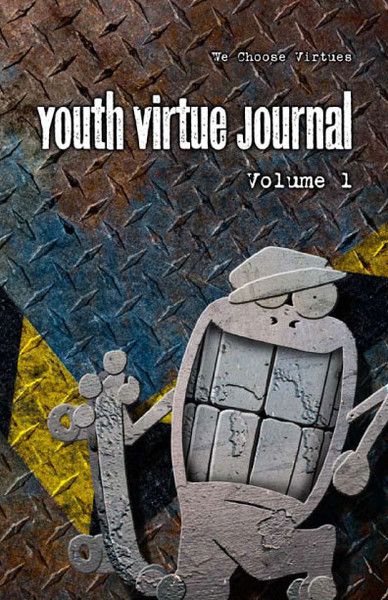
As you can see, the journal has a fun, contemporary style in order to attract the preteen/teen crowd. It is not juvenile or cartoonish.

We Choose Virtues Review
This journal covers nine different virtues in 107 pages. They each start by saying, "I am..." and include attentive, content, forgiving, gentle, helpful, honest, obedient, perseverant, and respectful. Each chapter begins with a short explanation of the virtue—what it is and what is not. Kids are encouraged to write in the journals as they answer questions. Every chapter asks them to dream about something and reflect on what might get in the way of achieving that dream. This is exactly the same throughout the entire book. They then have the opportunity to think about or answer a long list of questions related to themselves like, "Do others think of me as a person who interrupts?" and "Am I a bully in words or actions?"

A scale from 1-10 is provided where they can rate themselves based on how they see that virtue at work in their own lives. They can then answer some questions that force them to look outside of themselves. Do they know someone who displays the virtue? Have they ever been negatively affected by someone who didn't display the virtue? The next section provides quotes by a variety of people related to the virtue. Some of these include biblical quotes. The person's name is listed, not the book, to keep it non-religious in nature, secondary to the original purpose of the journal. Again, Scripture can be downloaded to use with the journal.

There are pages where the teen can write answers to some questions and redo the scale; the second time is the virtue goal. They then can sign their names to commit to being perseverant, attentive, forgiving, etc., and not the opposite.

How we used this product: I would either sit with all of my kids, two of my kids, or just one and read through the whole chapter on the virtue. I would ask them each of the questions, but it seemed that some questions were rhetorical (could be because I am their parent) or didn't apply to them. They would rate themselves on the first scale but assumed a 10 was the "right answer" on the second scale that asked where they wanted to be in relation to the virtue. Sometimes they would ask a question or I would think of something else to talk about that related to the specific virtue, so further discussion was a benefit.

Our opinions of this product: I asked my two sons what they thought. Here is what they said: "It had some good tips and had potential, but it seemed repetitive" and "It was interesting and made a lot of sense, but it was repetitive." They were not together when I asked them their opinion, so it was interesting to me that they both thought it was repetitive. I would have to agree. A lot of the same elements are in each chapter. The fact that they had to talk about a life dream, something they wanted to accomplish in each chapter, became very redundant. They weren't sure what they were supposed to say.

Some of the other items that can be downloaded that correspond to the Youth Virtue Journal are the Youth Mentor Handbook, the Mentor Meeting Report Form, and the Youth Character Assessment. The assessment form could be very helpful for seeing the changes in your child, but the report form does not seem to have any function if you are going through the book with your own child. The handbook says, "A mentor is not a parent either...they don't have any direct authority in the young person's life..." I'm not sure what to do with that. On the one hand, everything that book says a mentor is can also apply to parents. On the other hand, is it saying that I shouldn't use this book with my own kids? The mentor handbook has some useful things to say, even if you are using the journal with your own children.

I have mixed feelings about this product. It is a high-quality product. I really like the quotes that are included and the graphics. It is obvious that Heather McMillan truly wants to help youth change their lives, and many of today's youth need to learn virtues. I don't know if it works well, though, for homeschool families. While there is a verse and Bible heroes page that can be downloaded, I almost feel like deeper reflection into someone who possesses the virtue (Bible character or someone from recent times) would be more helpful. I can see how troubled teens could benefit from pausing to reflect on themselves and people around them. However, I think I'd like something meatier to work through with my kids if I were going to pay for it.
The Youth Virtue Journal comes in paperback and retails for $17.00, but We Choose Virtues has some special sales going on this summer:

1. MAY-JUNE: *Promo Code BIG50 for 50% off our amazing set of 12 11x17 Kids of VirtueVille Posters! This is the first time we have ever offered these posters at this price. They are great for school classrooms, Kids Church, or your homeschool room. Kids love them for their bedrooms, bathrooms and kids’ hallways.

2. JUNE-AUGUST: *Promo Code BTS20 for 20% off anything in our WCV Store. This includes any product for kids or youth. Let’s start School with Virtues this year!

You can also find We Choose Virtues on these social media outlets:

Facebook – https://www.facebook.com/wechoosevirtues
Pinterest – http://www.pinterest.com/WeChooseVirtues/
Blog -- http://www.wechoosevirtuesblog.com/


See what other reviewers are saying about this product and other virtue products for children:

Click to read Crew Reviews

Crew Disclaimer

Thursday, June 5, 2014

Learning Breakthrough Program Review

Learning Breakthrough Program Review

*Highly Recommended*

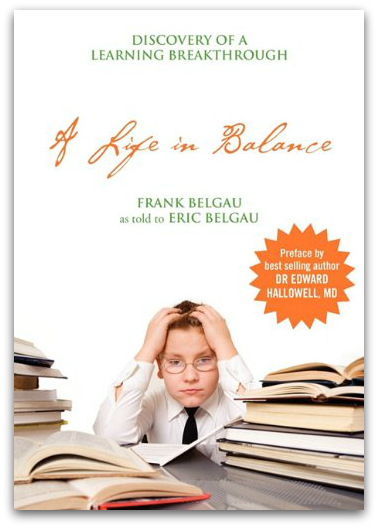
I have had the opportunity to review a book by the creator of the Learning Breakthrough Program, Frank Belgau (as told to his son Eric). It is called A Life in Balance.

Learning Breakthrough Program Review

I wasn’t sure what to expect when I received A Life in Balance. I had hoped that it would provide some techniques and strategies for teaching my kids in the way that they learned best. At the very least, I figured it would be an interesting read. Well, once I started it, I couldn’t put it down. First of all, Frank Belgau has had one of the most interesting lives I’ve ever read about. Eric Belgau’s idea of putting his father’s life on paper was brilliant. I was amazed by the way God put people and events into Mr. Belgau’s life—and orchestrated it all perfectly—to lead to each new step in his journey of discovering the Learning Breakthrough Program. His story is full of hope and promise. He also shares his frustration with politics and bureaucracy. Yet, these things were placed in his path as well to change his course and help the program become what it is today. I enjoyed reading about how he met his wife. I almost felt as if I was there, watching his life unfold.

As I read about the techniques he used to bring about reading improvement and comprehension of the learning-disabled children that he worked with, I wished I had the balance board and the other tools that he used to see if those things would work with my children. While my children don’t have ADHD or dyslexia, there are things they struggle with such as focusing in order to get their work done, understanding math, and remembering the things they have read.

Since my background is in the healthcare field, I have had many classes in anatomy, physiology, pathophysiology, etc. So, reading chapters about the brain should not have been an issue for me. However, I was so enthralled with the rest of the book—it read like a novel—that once I arrived at chapter 26, “Neural Networks and Neural Plasticity,” I had a hard time picking the book up. Knowing that I needed to finish it for the purposes of the review, I worked through the final chapters. The dryness of the scientific explanation at the end would be the only negative that I could find in the whole book. In relating his story, Frank shared that, though they learned many strategies for helping children in the first few decades of success, knowledge of brain function and how it was tied to other processes going on in the body was not known at that time. Science was not advanced enough to understand why these strategies were helping. In recent times, however, a great deal of light has been shed on brain function. Now we know why The Learning Breakthrough Program works. 

One of the great things about this book is that Mr. Belgau does not try to convince the reader to purchase his complete program, though the reader might consider doing so once he/she has read this book. I admit that I am seriously tempted. What he does do, however, is provide practical strategies that will produce positive results without having to spend any money. The Appendix talks about "The Space Walk." This is a series of activities through which the parent can observe his/her child walking, hopping, skipping, etc. A explanation of why these brain-training exercises enhance brain fitness and questions for observation purposes are provided. It is recommended to record the progress over time to see the change in learning ability. Now that this school year is at an end, I think I'll work on The Space Walk with my kids this summer to see if it helps them, especially my daughter and her inability to grasp math concepts.

This is an important book for those who have children with learning difficulties. The Learning Breakthrough Program has proven itself, time and time again, to be an ADHD alternative treatment (wouldn't it be wonderful if your kids didn't need to take the medication?) and a dyslexia treatment. It's worth the read and a trial of The Space Walk. If you notice an improvement, the balance board and other items will accelerate the improvement in your child's brain function and learning ability.

The Learning Breakthrough Program website provides a link to purchase A Life in Balance through Amazon for $16.94. An excerpt of the book and recommendations by medical personnel and research specialists are provided on the website. All of the equipment written about in the book is available through the website as well. 

Here are some of the social media links for the Learning Breakthrough Program:


Click to read Crew Reviews
Crew Disclaimer

Tuesday, June 3, 2014

50 States: Wisconsin

Wisconsin (WI) became the 30th state in the Union on May 29, 1848. After officially becoming a territory in 1836, businessmen and politicians began to push for statehood in order to increase their power. By 1846, they had the support they needed and began to draft a constitution. It would take two years and many heated arguments before a state constitution could be ratified.

Wisconsin's capital is Madison, and the largest city is Milwaukee. People who live here are called Wisconsinites. They are also referred to as Cheeseheads because a great deal of cheese is produced in Wisconsin. They have a special way of speaking, such as "pert-neer" and "you betcha." Here are a some common words and their definitions.

Some famous people born in Wisconsin include:

Thornton Wilder...novelist and playwright
Arthur Davidson...one of the founders of Harley-Davidson
William S. Harley...another founder of Harley-Davidson
Frank Lloyd Wright...architect
Laura Ingalls Wilder
Orson Welles...actor
Les Paul...guitarist
Georgia O'Keeffe...painter
Carrie Chapman Catt...women's rights activist
Danica Patrick...race car driver

These people are very interesting. Why not pick one to research this summer and write a paper about them?

Wisconsin covers more than 65,000 square miles, making it the 23rd largest state. As of 2013, there were more than 5.7 million people living there. The economy of Wisconsin is supported greatly by the processing of cheese and butter, the farming of corn, the manufacturing of machinery and beer, and tourism.

Wisconsin's nickname is the "Badger State," and its motto is "Forward." Other state symbols include:

Bird...Robin
Animal...Badger
Wildlife Animal...White-tailed deer
Domestic Animal...Dairy cow
Dog...American Water Spaniel
Fish...Muskellunge
Insect...Honeybee
Grain...Corn
Flower...Wood violet
Tree...Sugar maple
Fossil...Trilobite
Beverage...Milk

Wisconsin's state flag was adopted in 1913. The blue flag depicts the state seal which includes the motto, the coat of arms, a sailor, a miner, a badger, and the year of statehood on it. The coat of arms shows a plough which represents Wisconsin's agriculture industry, a pick and shovel to represent lead-mining industry, an arm and a hammer together to represent artisans and laborers, and an anchor to represent the maritime industry. E Pluribus Unum, the motto of the U.S. is in the center of the seal.


One of the first things I think about when I hear Wisconsin is Wisconsin Dells. There are many different, exciting attractions and activities in this part of the state. You can also view the House on the Rock in Spring Green. Cave of the Mounds is in Blue Mounds. Lambeau field in Green Bay is home to the Green Bay Packers. The Pabst Mansion in Milwaukee can be toured year round. This was the home built by the creator of the Pabst Beer Brewery. Frank Lloyd Wright's home—Taliesin—stands in Spring Green. The Harley-Davidson Museum is located in Milwaukee.
There are museums, zoos, and ski resorts as well. There does not appear to be a shortage of things to do in Wisconsin, no matter what time of year you visit.

Test your Wisconsin knowledge with these learning games.

The following are some Wisconsin-related items that can be found at www.christianbook.com.


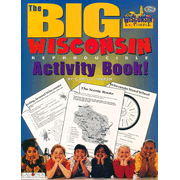
495429: Wisconsin Big Activity Book, Grades K-5 Wisconsin Big Activity Book, Grades K-5
By Carole Marsh / Gallopade International

Whether you're visiting a new state or starting a state studies course, The Big Wisconsin Reproducible Activity Book will fulfill your wishes for a fun and educational way to learn state facts! Featuring worksheets on Wisconsin's history, geography, famous people, places, legends, and much more, you'll get a thorough introduction to what makes this state unique. Crosswords, dot-to-dots, mazes, coloring, word jumbles, writing, hidden pictures, and other fun activities will make your students want to learn more and more. Great for review and research! 96 reproducible pages, softcover. Answers are printed upside down at the bottom of the page. Activities range in difficulty; Grades K-5.

846577: Wisconsin Wisconsin
By Jeffrey Horn & Catherine Gardner(Editor) / Gareth Stevens Publishing

Bolster students' knowledge of the state they live in! Discover the history of the state, including Native American history, colonial history, and modern history, and learn about the current demographics of the state, the land itself, the economy, state government, and cultural attractions. "Fun Facts," "Famous people," and "In history" sidebars provide interesting tidbits of information. Full-color photographs, time line, glossary, and index included. 32 pages, softcover. Grades 2-4.

771998: It Happened in Wisconsin, 2nd Edition It Happened in Wisconsin, 2nd Edition
By Michael Bie / Globe Pequot


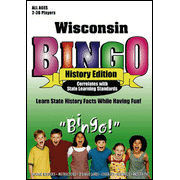
401543: Wisconsin History Bingo Wisconsin History Bingo
By Carole Marsh / Gallopade International

Must-know state facts for kids to learn while having fun! Includes: Statehood Date, State Name Origin, Capital City, State Flag, State Motto, State Bird, State Population, Economy, Media, Governor, Explorers, Native Peoples, Current Events, and more! Each game includes 36 different playing cards.


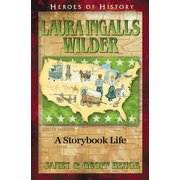
296329: Laura Ingalls Wilder: The Storybook Life Laura Ingalls Wilder: The Storybook Life
By Janet & Geoff Benge / YWAM Publishing

The Heroes of History series chronicles the true stories of fascinating men and women who changed the course of history.
From the big woods of Wisconsin to the Indian country of the Great Plains, new adventures and landscapes filled the rich childhood of Laura Ingalls Wilder. On a frontier steeped in both danger and great possibility, Laura would grow up to witness firsthand the rapid transformation of the West as pioneers and covered wagons gave way to farms, towns, and railroads.
For ages 10 and up.

49638EB: Who Was Laura Ingalls Wilder? - eBook Who Was Laura Ingalls Wilder? - eBook
By Patricia Brennan Demuth / Grosset & Dunlap

Who really lived inside The Little House on the Prairie? Find out in this young biography of Laura Ingalls Wilder! Readers will see just how similar Laura's true-life story was to her books. Born in 1867 in the "Big Woods" in Wisconsin, Laura experienced both the hardship and the adventures of living on the frontier. It wasn't until after she was sixty that Laura Ingalls Wilder started chronicling those times, which resulted in nine Little House books, a hit TV series that ran for eight years, and her own permanent place as a heroine of the American West.

8467061: Who Was Laura Ingalls Wilder? Who Was Laura Ingalls Wilder?
By Patricia Brennan Demuth / Grosset & Dunlap

Who really lived inside The Little House on the Prairie? Find out in this young biography of Laura Ingalls Wilder! Readers will see just how similar Laura's true-life story was to her books. Born in 1867 in the "Big Woods" in Wisconsin, Laura experienced both the hardship and the adventures of living on the frontier. It wasn't until after she was sixty that Laura Ingalls Wilder started chronicling those times, which resulted in nine Little House books, a hit TV series that ran for eight years, and her own permanent place as a heroine of the American West.

932434: Frank Lloyd Wright: An Autobiography Frank Lloyd Wright: An Autobiography
By Frank L. Wright / Pomegranate Communications

93629: Famous Buildings of Frank Lloyd Wright Coloring Book Famous Buildings of Frank Lloyd Wright Coloring Book
By Bruce LaFontaine / Dover Publications

Enrich your child's imagination and creativity with these 44 line drawings on some of the finest architectural achievements of the 20th century in the work of Frank Lloyd Wright. Each page is suitable for coloring and includes information about each structure.

415072: Georgia O"Keeffe Georgia O'Keeffe
By Carole Marsh / Gallopade International

Correlated to state and national standards, this series teaches students about important people, places, and events in history. Broken down into short, easy-to-read passages reinforced by simple activities, each reader includes a glossary, interesting facts, reading, puzzles, highlights of achievements, sequencing of important events, and simple math activities. 12 pages each. Grades K-4.

512637: Our Town: A Play in Three Acts Our Town: A Play in Three Acts
By Thornton Wilder / Harpercollins Publishing


76252: Our Town, Novel Units Teacher"s Guide, Grades 9-12 Our Town, Novel Units Teacher's Guide, Grades 9-12
By Wilder / ECS Learning Systems, Inc.

This teacher's guide for Thornton Wilder's novel Our Town includes a number of teacher's helps, exercises, discussion questions, assessment tools, graphic organizers, writing and art ideas, critical thinking challenges, extension activities, and a glossary. Perfect for in-depth study and discussion!
Background information includes a summary of the book, information about the author, and ideas for initiating activity; the discussion questions follow the chapters in the book. Page numbers are included which reference the edition quoted in the front cover [Harper Perennial paperback edition]. 32 reproducible pages, softcover. Grades 9-12.

831373: Thornton Wilder Thornton Wilder
By Penelope Niven / Harpercollins Publishing

5954EB: The Old Man and the Harley: A Last Ride Through Our Fathers" America - eBook The Old Man and the Harley: A Last Ride Through Our Fathers' America - eBook
By John Newkirk / Thomas Nelson

In 1939 Jack Newkirk rode across country on his Harley Davidson VL Big Twin, from the New York World's Fair to the San Francisco Golden Gate Exposition. In The Old Man and the Harley, author John J. Newkirk paints a memorable portrait of his father Jack and the Depression/WWII generation by retracing the journey with his father. Part history, part adventure, The Old Man and the Harley is also a poignant tribute to America's Greatest Generation.

994666: Chat Pack Wisconsin: Fun Questions to Spark Wisconsin Conversations Chat Pack Wisconsin: Fun Questions to Spark Wisconsin Conversations
By Questmarc Publishing / Questmarc Publishing

932772: Wisconsin Crosswords Wisconsin Crosswords
By Andrew J. Ries / Adventure Publications

792141: Food Lovers" Guide to Wisconsin: The Best Restaurants, Markets & Local Culinary Offerings Food Lovers' Guide to Wisconsin: The Best Restaurants, Markets & Local Culinary Offerings
By Martin Hintz & Pam Percy / Globe Pequot